The bottleneck
is us.
AI already works for hours at a stretch, unsupervised. The limit is how ready we are to use it, not the model.
Everything stacks
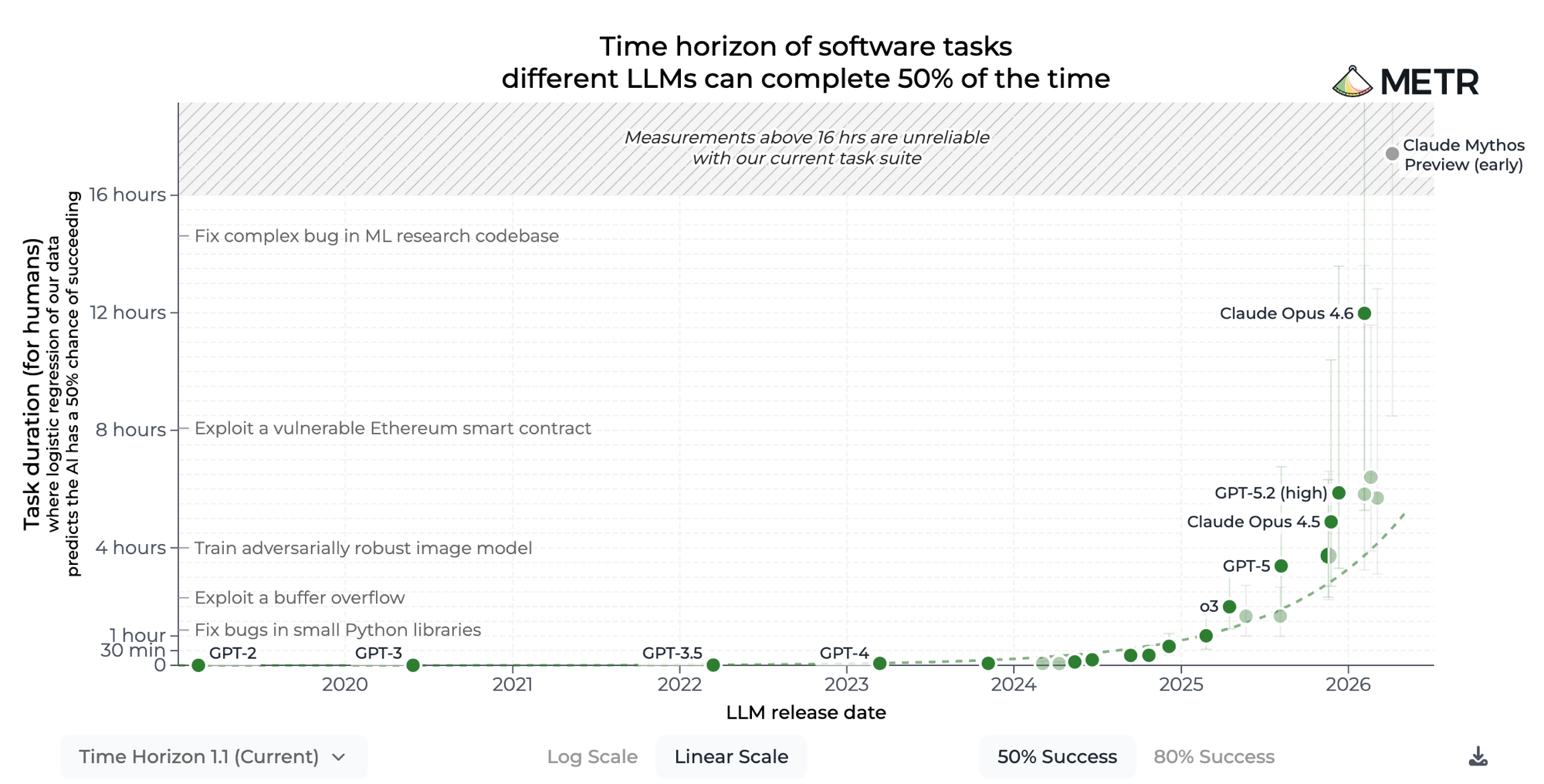
It already runs for eight-plus hours
Unsupervised. On software tasks that size it now succeeds about half the time — and that horizon has kept doubling.
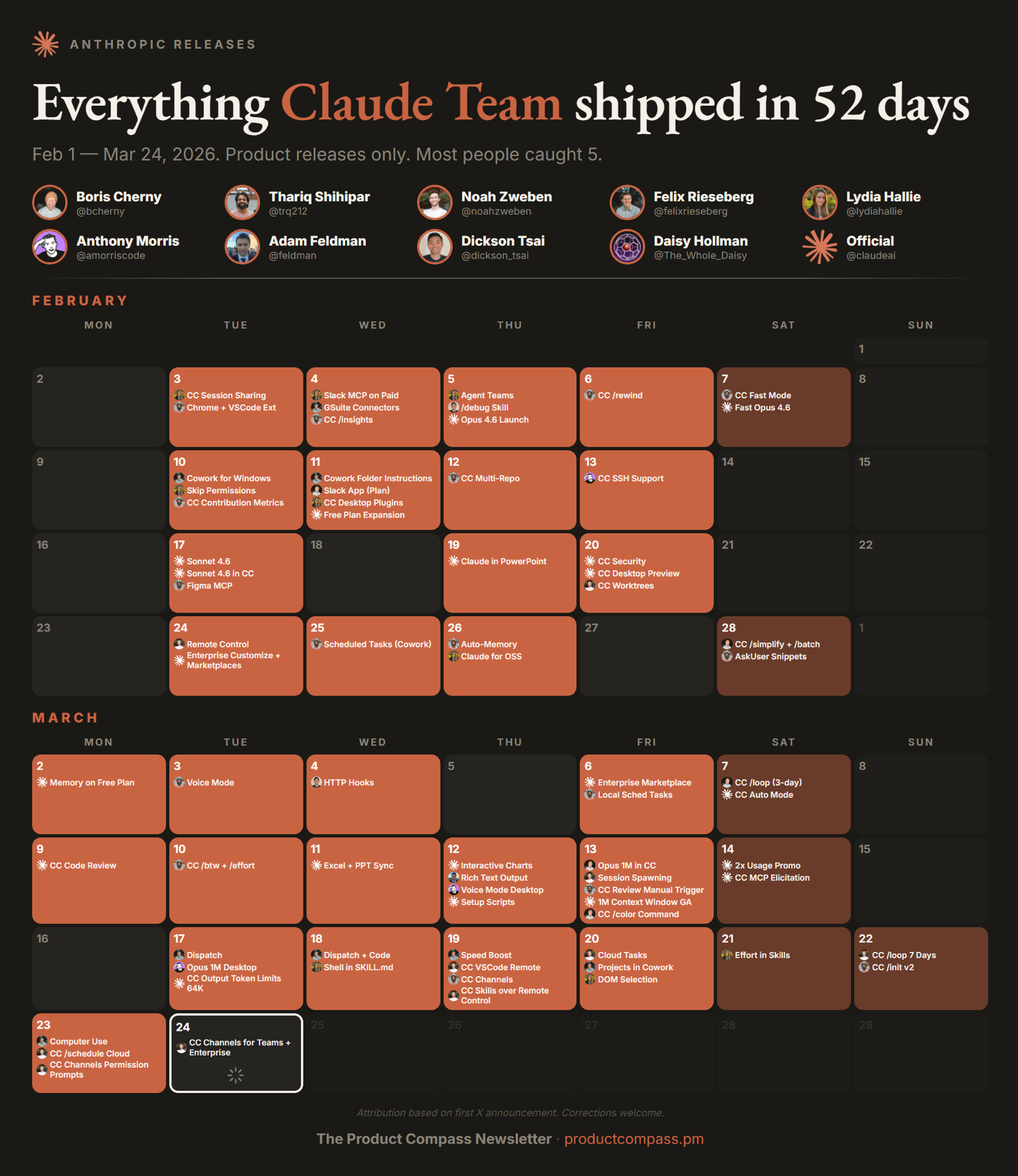
The proof: Claude ships every single day
Anthropic runs AI throughout its own engineering pipeline. The technology is ready to use.
Source: The Product Compass. Anthropic releases, Feb–Mar 2026.
AI saves time. Then demand takes it back
Jevons' Paradox, applied to cognitive work: when AI makes execution cheaper, demand expands. The new baseline becomes more output, more customization, and faster turnaround.
Same tool. Two harder jobs.
Revenue is grown from increased output, not automation.
Marketing
Write 2–3 ads for the month
Draft 50 variants in minutes
Run a live portfolio of audience experiments
Product
Spend a week aligning and drafting a PRD
Produce the first complete draft in minutes
Arbitrate more scope, dependencies, and trade-offs
So, what is Toqan?
An LLM / agent with access to an entire virtual computer, via the command line. That's why it can stay always on, why we can manage it, and why it's easy to connect securely.
A live walkthrough
of Toqan
See it all in motion. Then we get into the how.
Quality depends on your specs, not the model
Ask for "a snake game" and you get a grey box and a blinking square. Ask for a neon arcade release — combos, power-ups, generated sound, and a guided tour that teaches a first-time player how to play — and you get that instead. Same model. You decided what "correct" means.
Try it: paste this
No setup, no boilerplate, one plain sentence. Copy it into your agent and a working, hosted app appears.
Quality depends on your specs
Same game, same model. You define what "good" means, right down to the onboarding tour, and it follows every word.
Dark navy neon theme, a snake that glides instead of snapping, screen shake and a confetti burst on every point, a combo multiplier, power-ups (slow-mo, ghost walls, double points), an entry menu with three difficulties, high scores in localStorage, and music plus every sound effect generated with the Web Audio API, no audio files.
On first load, run a guided onboarding tour with driver.js from a CDN covering the board, the score, the controls and the power-ups. Remember it in localStorage and put a Replay tour button in the menu. Then share the HTML file with me.
Chat, files & sending files
Downloading a person.md, uploading it back into the chat, attaching a doc for it to read. See the file flow in Toqan before we put it to work.
Add your voice and design
AI output defaults to generic because nothing tells it otherwise. Add your voice and design, and it stops looking generic.
Start from a person.md
Twelve ready-made voice profiles — OLX Group and Prosus leaders, plus Fabricio Bloisi — scraped from the public web. Pick one and click to download.
Inside fabricio-bloisi/person.md
One file, and the agent already knows how to sound like him: tone, vocabulary, structure, even the guardrails.
Tone & persona
Optimistic, forward-looking, ambitious. Inspiring, energetic, authoritative, direct — a visionary tone that pushes bold aspirations and rapid execution.
Vocabulary
Action-oriented words like "abundant," "moat," "discipline," "compounds," plus tech/business terms: "AI native," "ecosystem," "high-growth startups."
Structure
Opens with a personal anecdote or bold statement, builds a clear argument, closes with a call to action or a visionary outlook.
Background
Founded Movile at 21, bought iFood as a 20-person startup and scaled it, Group CEO of Prosus and Naspers since July 2024. Computer Science at UNICAMP, MBA at FGV.
Save it as data/person.md
Drop the file you just downloaded into your agent's data folder, and any prompt below can write in that voice.
Create a design.md
Point an agent at a site you love. It reads the look and saves a design.md any agent can reuse.
Machine-readable isn't human-readable
Open the design.md you just made and it reads like a config file. That's not a mistake — you're not the reader. Judge it by what comes out, not by how it reads.
“Clean, modern, premium, with a bold accent colour”
Every word is true and none of it is executable. Ask five agents for that and you get five different pages, because you handed over a feeling and left every actual decision open.
#d90276 accent, 8px spacing scale, 52px titles, never a gradient behind text
A wall of hex codes, sizes and rules. Dull to read, impossible to misread. Nobody wants this as a brand book — and that's fine, because the only reader that matters here is the agent.
More than how it looks
Colours and fonts are the cheap half. A design.md that stops there still leaves every real decision to the agent — and it will happily make them for you, differently each time.
Rules and refusals
Never more than two fonts. No text on a gradient. No stock-photo filler. One clear "never" is worth three "shoulds" — it removes the mistake you keep correcting by hand.
Hierarchy and density
What leads, what gets cut, how much goes on one page. One idea per slide, the headline carries the message. This is where "make it dense" stops being a note in a prompt and becomes a standard.
Components and states
What a card, a table, a chart, a quote, a button look like — including empty, loading and too-long. The agent assembles from your parts instead of inventing new ones each task.
Defaults for the unwritten case
What to do when the file doesn't say: when unsure, choose the plainer option. Writing down your tie-breaker is what makes the twentieth artifact look like the first.
Teach AI your business
A handful of markdown files give an agent the context a new hire would need: who's who, what matters, how you win. Drop in people.md, okr.md, strategy.md, and every task lands in context.
One voice. Every artifact.
Turn your voice and design into agent-readable files. They carry from task to task — the same identity behind your decks, emails, and apps.
Now make it a deck
Same two files, a new artifact. Ask for three slides about person.md — the agent writes them in your voice and styles them from your design.md.
Density beats volume
AI made content cheap to produce, but reader attention didn't grow. Don't ship 80 pages — make it dense, lead with hierarchy, and people will actually give feedback.
Cut it to one page
Turn a long report into a single dense HTML page that earns feedback.
Learning, personalized
Tell AI who's reading, their role and their background, and one idea becomes two explanations. The same concept, reframed for an exec and an engineer, each in their own vocabulary.
Let it explain skills
Before you build one, let AI explain how skills work — reframed for you, using your own background and voice.
One topic, two readers
The same skills, read two ways. The MBA gets the business case. The engineer gets the implementation.
A skill is a standard operating procedure your agent never forgets
You document the process once — the way you'd write an SOP for a new analyst — and the agent executes it the same way every time, forever. No onboarding, no drift — the knowledge is captured once and reused every time.
Reusable instructions, loaded on demand
A skill is a markdown file with YAML frontmatter (name + trigger description) and a body of step-by-step instructions. The agent matches the request against the trigger, and if it fires, injects the file's contents into context at that turn — a lazily-loaded, dynamically-dispatched system prompt fragment. No fine-tuning, no embeddings, no retrieval pipeline: just conditional context injection, versioned as a file in your repo.
When to use skills
Notice yourself correcting your agent twice, or a process nobody's written down that you need done reliably. That's the signal: capture it once, as a skill, and stop repeating the correction.
Skills & the Skill Market
Where skills live, how to browse the market, and how to install one in a click. Then we install the prediction-market data skill together.
Install the prediction-market data skill
It teaches your agent Polymarket's live APIs — markets, prices, order books. Run the command, or upload the zip under Skills → Add a skill.
Put the skill to work
A live data source, your own voice, one dense page.
Automate your first skill
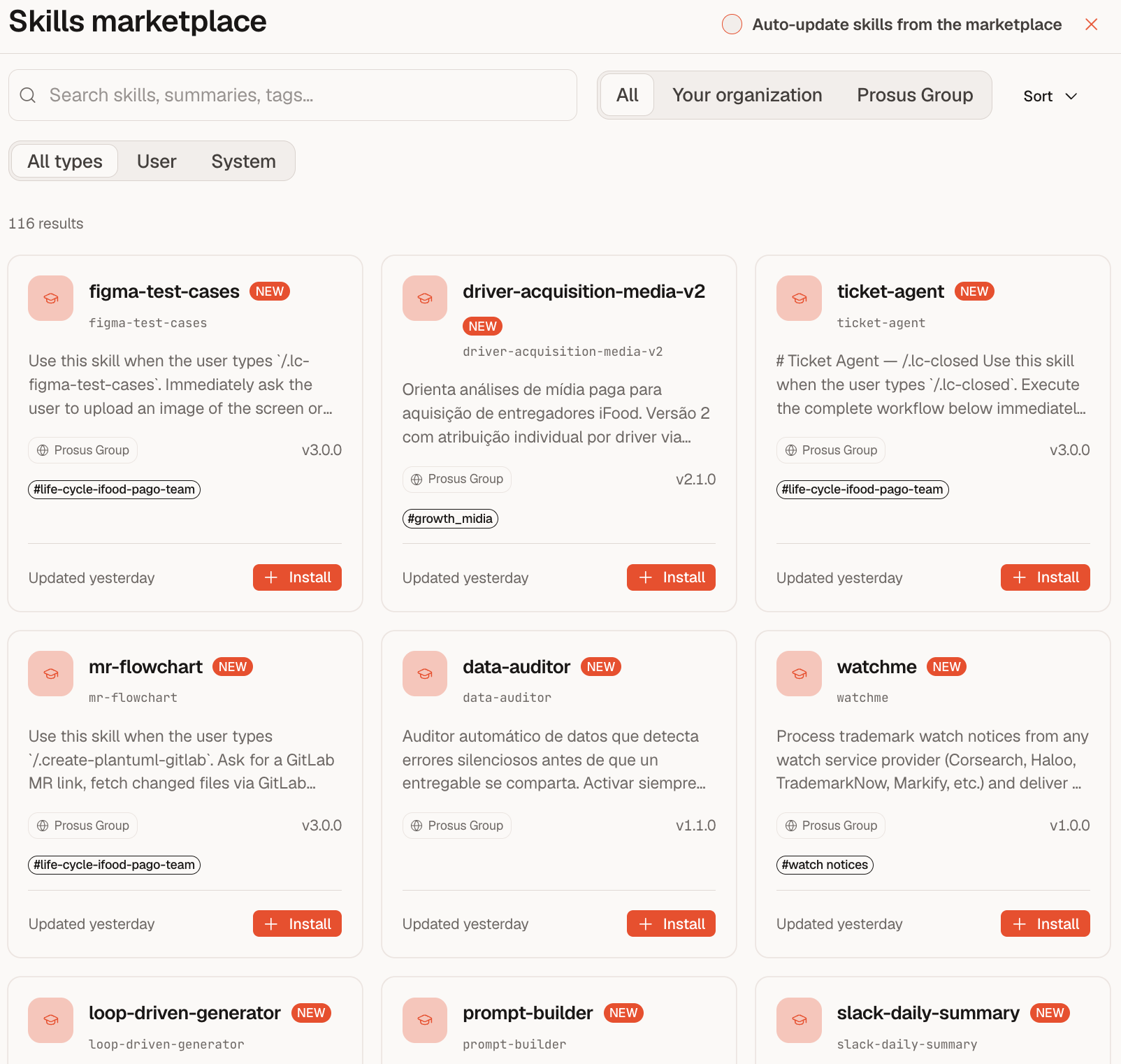
Skills compound across the group
A skill written once at one company is installable at every other. Nobody re-solves a solved problem.
Everyone's skills, one pool
The Skill Marketplace
Learning to make videos is just installing a skill
Install hyperframes-animation once to turn a long write-up into a 30-second video. Your voice and metaphors carry into the visuals too.
Take a break.
Grab a coffee, stretch, reset. We pick up right after.
Setting up an MCP server
Where MCP servers live, what a connection actually grants, and how to wire one up end to end.
Connect your data
MCP servers live under Connections. Getting access to data was never this easy — and the agent can act across them directly.
Or bring your own server
Copy the three values straight off this slide into Connections → Add MCP Server. Or paste the one-line command if you are on the CLI.
Confirm the source is trusted, and that it won't expose easily prompt-injected systems like email or calendar.
Verify connection
Turn it into a chart
Build a weather app
Show off what you made
Pull up whatever the skill just built for you. Share the link or the file, and let's see a few live in the room.
Stop steering.
Let it learn.
Give AI a goal and let it research, build, and improve on its own — through repeated trial, measurement, and revision.
Just keep nudging
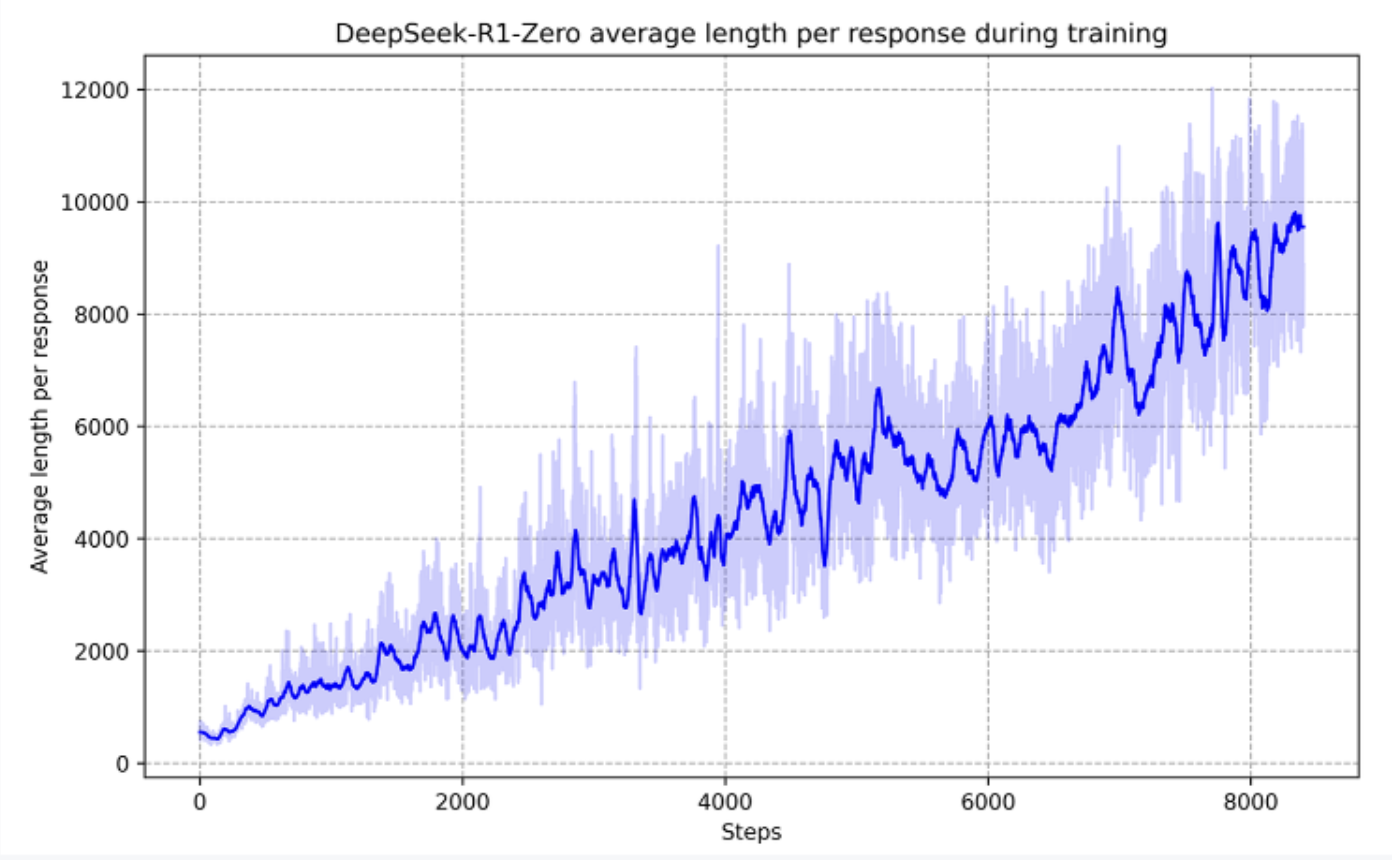
Small, repeated nudges compound. This is the same loop that taught DeepSeek-R1 to keep thinking longer on its own.
Your turn: research it
Point it at a real question and let it run. We'll sharpen the technique on the next slides.
Don't one-shot the search
The agent won't nail the query on the first try — the web is too vast. Loop it instead: search, evaluate the source, find the gaps, dig deeper or adjust. A depth-first beam search.
Loop the search
One living report, five passes. It finds its own gaps and digs deeper.
Let it loop and review
Give it a goal and let it loop: create, review, revise, repeat. A model rarely catches its own faults while generating. But force it to review, again and again, and quality climbs with every pass.
Brief the goal, not the task
Why a restaurant?
Because it is the smallest complete business. Demand you cannot control, staff you pay either way, stock that spoils, and guests who walk out if you keep them waiting. Thirty days of it fits in an afternoon.
Run the restaurant
Kick this off now — it runs 10–20 minutes in a task. We'll unpack what it is while it works.
We gave AI a restaurant
A simulated 22-table Rotterdam bistro, 30 days, one goal: end the month in profit. No instructions. Every morning it reads yesterday's numbers, adjusts staffing, stock and prices, and learns from what happened.
REST-bench · calibrated to real restaurant-industry research
The simulations
REST-bench models a real market and a strict scorer, so the agent's every move has consequences.
A simulated market
REST-bench · prosus.md/exercises/exercise-6 · live dashboard at localhost:8765
Profit, but not at any cost
REST-bench · The Rotterdam Table · 22 tables · 78 seats · €10,000 starting capital
The score comes with a reflection
Along with the score, the agent explains which strategies worked, where it lost money, and what it would try next — input for the next run.
Reset — and run it better
You've seen one month play out. Reset the run, then brief your agent on what to change.
Kick off another task with instructions you think will improve this run
Go around the room
Compare your second run with your first. What instruction moved the score most? What surprised you?
Optional: push it further
If your task finished early, evaluate the strategy once more and go for a third run.
Reset — round two
Optional third pass. You now have two months of evidence — compare the runs, keep what worked, fix what didn't.
Look at both previous runs, compare what worked and what didn't, and kick off another task with instructions that improve on this run
What can your loop teach you?
It runs hundreds of experiments you wouldn't try by hand, and the winning strategies are often counter-intuitive. You set the goals, taste, and guardrails; it returns strategies you hadn't considered.
Could AI run your loop?
Three tests: the outcome is measurable, you can iterate fast, and the goal is clear. Pass all three and AI can learn to run that part of the business — ads, pricing, even org design.
Knowledge sharing across portfolio was never this effective
A loop running at one company surfaces strategies that transfer. Point a second company's loop at the same learnings and it skips the trial-and-error the first one paid for.
Verification is the new bottleneck
As generation gets nearly free, verifying what's actually right becomes the constraint. Prosus's edge: a billion customers, a verification layer at a scale almost no one else can match.
What will you change? I will start;
Start with one of these suggestions, or add your own.
Make the business readable
Turn processes, goals, and knowledge into structured text. Documentation becomes the fuel.
Turn learnings into assets
Share context, skills, and blueprints across teams and portfolio companies. No gatekeeping.
Align your goals and metrics
If you set goals, make sure you have the correct metrics to follow them. Think sensitive, correlated metrics.
Aim for full autonomy
The north star. Not today's reality, but every step pushes us closer: AI loops that learn, research and build on top of structured context, at machine speed.
Thank you.
The bottleneck was never the model. Go build.